Professional moss and thatch removal to restore a healthier, stronger lawn.
Scarification to remove moss and thatch
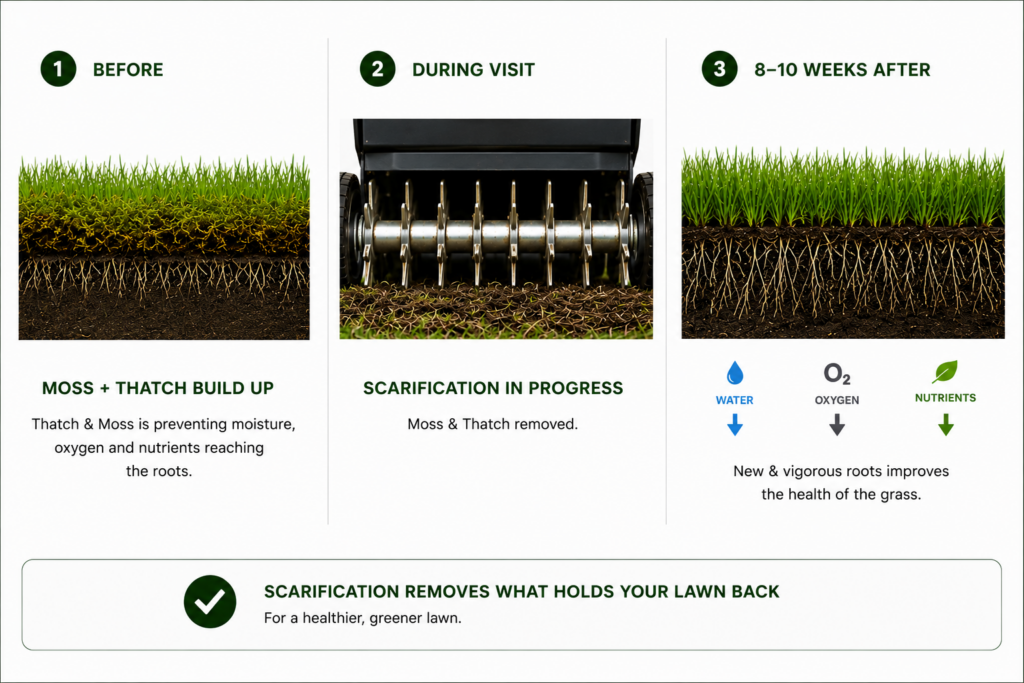
Professional scarification helps remove moss and excess thatch build-up that can prevent lawns from properly breathing, draining and absorbing nutrients. Removing this layer encourages healthier, thicker grass growth and improves overall lawn condition throughout the growing season.
All Emerald Green scarification work includes a professional iron sulphate moss treatment prior to scarification to blacken and weaken moss for more effective removal. A FREE Recovery+ specialist turf support treatment is also applied following scarification to support healthier recovery, improved re-establishment and stronger turf development.
Where beneficial, aeration services may also be recommended to further improve drainage, root development and overall turf health.
Simply request a free lawn assessment and your lawn will be professionally measured and assessed to confirm the most suitable approach for your lawn with no obligation.
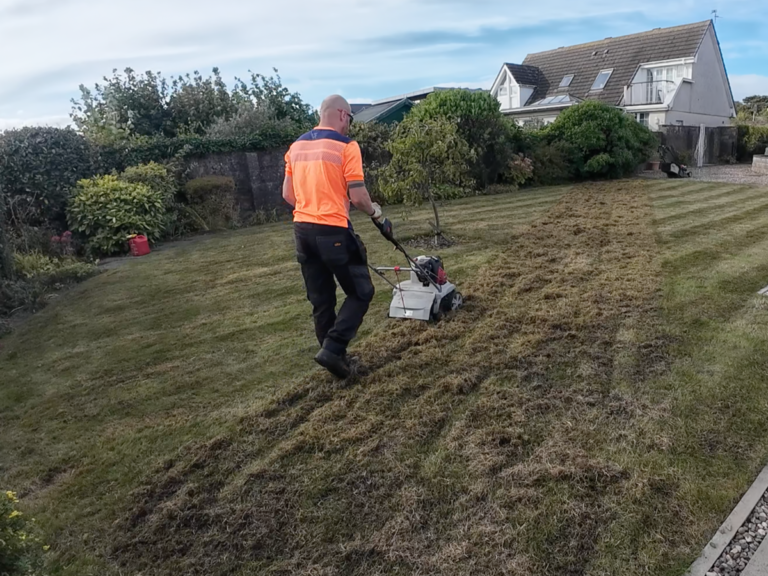
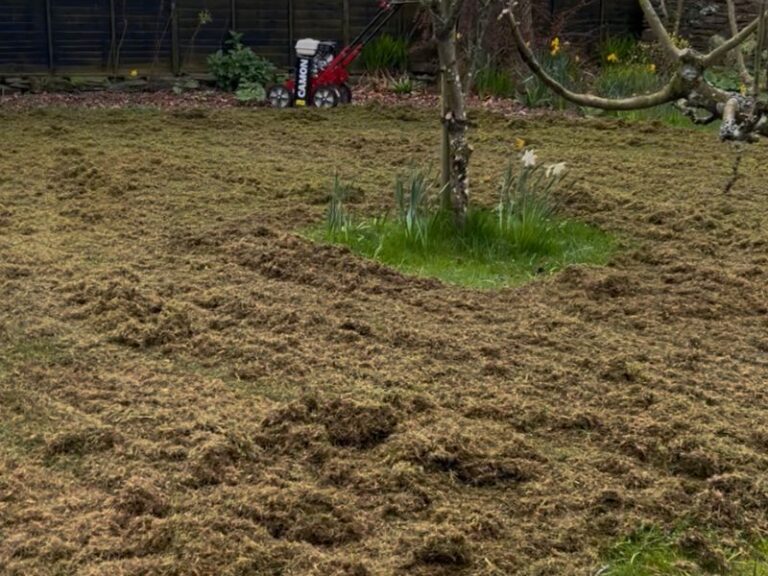
Scarification removes the layer of moss and thatch that builds up at the base of the lawn, allowing water, oxygen and nutrients to reach the roots more effectively. While lawns can look a little untidy immediately after treatment, new growth quickly fills in, resulting in a healthier, thicker and more resilient lawn within a matter of weeks.
Why your lawn needs scarification
Over time, lawns naturally build up a layer of moss and thatch made up of dead grass, roots, and organic debris. This layer sits just below the surface and prevents essential air, water, and nutrients from reaching the soil.
As this build-up becomes thicker, your lawn may begin to feel spongy underfoot, struggle to drain properly, and become more vulnerable to moss growth, weeds, and disease.
Scarification removes this layer, allowing your lawn to breathe again and creating the ideal conditions for stronger root growth, improved drainage, and a thicker, healthier grass surface.
How often should my lawn be scarified?
Regular scarification helps reduce moss and thatch build-up, allowing water, air and nutrients to reach the soil more effectively. Combined with our Emerald Green Lawn Care Programme, which provides five seasonal treatments throughout the year, it can help maintain a healthier, thicker and greener lawn.
Regular scarification improves soil structure, reduces moss competition, and allows fertilisers and seasonal treatments to penetrate the root zone more effectively.
When is the best time to scarify a lawn?
The ideal times to scarify a lawn are:
Spring (late March – May)
Early Autumn (September – mid October)
These periods provide the best growing conditions for recovery, allowing the grass to repair quickly and establish new growth.
Summer and winter scarification is not recommended, as extreme temperatures and slower growth rates can delay recovery.
Restore Lawn Health With Professional Scarification
For lawns requiring more extensive restoration, our Emerald Green Revival lawn renovation service offers a more comprehensive approach to improving tired, thinning or heavily damaged lawns through specialist renovation treatments and overseeding.
If your lawn is suffering from moss, poor drainage, or a spongy surface underfoot, professional scarification can dramatically improve its condition and help encourage thicker, healthier grass growth.
Book your free lawn survey today and receive a tailored recommendation based on your lawn’s current condition.